
The Fascinating History of the Isle of Man
 Nestled in the Irish Sea between England, Ireland, Scotland, and Wales, the Isle of Man is a place where history, legend, and natural beauty come together in remarkable ways. Covering just 572 square kilometres (221 square miles), this self-governing Crown Dependency has a rich heritage stretching back thousands of years. From ancient Celtic tribes and Viking kings to medieval castles and modern motorsport fame, the Isle of Man has developed a unique identity that sets it apart from its larger neighbours.
Today, visitors are drawn not only by its dramatic coastlines and rolling hills but also by a culture that proudly preserves its traditions, language, and independence. The island’s history is a story of resilience, adaptation, and cultural blending that continues to shape life on the island today.
Early Settlement and Ancient Origins
Archaeological evidence suggests that humans first arrived on the Isle of Man around 6500 BC, shortly after rising sea levels separated it from the British mainland. These early settlers were hunter-gatherers who exploited the island’s rich natural resources.
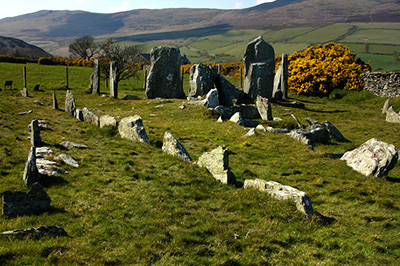
During the Neolithic period, around 4000 BC, farming communities established permanent settlements. They left behind impressive megalithic monuments, burial chambers, and standing stones, many of which can still be seen today. These structures reveal that the island was already part of a wider network of cultural exchange across the British Isles.
By the Bronze Age and Iron Age, the Isle of Man had become home to Celtic peoples whose customs and beliefs strongly influenced the island’s culture. The Manx language, which belongs to the Goidelic branch of Celtic languages alongside Irish and Scottish Gaelic, has its roots in this ancient period.
The Arrival of Christianity
 Christianity reached the Isle of Man around the fifth and sixth centuries AD. Irish missionaries, inspired by the teachings of St Patrick, played a major role in spreading the new faith.
Small chapels and keeills (simple Celtic churches) appeared across the island. Many of these sites remain visible today as ruins scattered through fields and along coastal paths. Christianity transformed island society and connected the Isle of Man to religious communities throughout Ireland and Britain.
The legacy of these early Christian communities can still be seen in the island’s carved stone crosses, some of which combine Christian imagery with later Viking artistic influences.
The Viking Age
Perhaps no period has had a greater impact on the Isle of Man than the Viking era. Beginning in the late eighth century, Norse raiders and settlers arrived from Scandinavia. Initially feared as invaders, many Vikings eventually settled permanently and integrated with the local Celtic population.
The Isle of Man became an important centre in the Norse-Gaelic world. By the tenth century it formed part of the Kingdom of Mann and the Isles, a maritime realm stretching across parts of western Scotland and the Hebrides.
The Vikings left a lasting legacy. Place names throughout the island often have Norse origins, and many of the island’s famous stone crosses display intricate designs blending Celtic and Viking traditions.
One of the most significant contributions of the Vikings was the establishment of Tynwald, the island’s parliament. Founded in 979 AD according to tradition, Tynwald is widely regarded as the oldest continuous parliamentary body in the world. Remarkably, it still functions today and remains central to Manx political life.
Medieval Struggles and Changing Rulers
During the medieval period, control of the Isle of Man shifted several times between Norwegian, Scottish, and English rulers. Its strategic location in the Irish Sea made it highly desirable.
In 1266, following the Treaty of Perth, Norway formally ceded the Isle of Man to Scotland. However, Scottish control was often challenged, particularly during the Wars of Scottish Independence.
Throughout the fourteenth and fifteenth centuries, the island changed hands repeatedly. Eventually, English influence became dominant, although local customs and institutions survived.
The Stanley family, who became Lords of Mann in the fifteenth century, played a significant role in shaping the island's administration. They governed with considerable autonomy, helping preserve the island's distinct legal and political traditions.
Smuggling and Maritime Trade
The Isle of Man’s location made it an important centre for maritime trade. During the seventeenth and eighteenth centuries, the island gained a reputation as a haven for smugglers.
Lower customs duties than those imposed in Britain created opportunities for merchants to import goods such as tea, tobacco, and spirits and then secretly transfer them to neighbouring countries. Smuggling became a major economic activity and was often tolerated by local authorities.
Concerned by the loss of tax revenue, the British government purchased the rights of the Lords of Mann in 1765 through an agreement known as the Revestment Act. This brought the island more directly under British influence while still preserving its internal self-government.
The Victorian Tourist Boom
The nineteenth century brought profound change. Steamships made travel faster and more affordable, transforming the Isle of Man into one of Britain’s most popular holiday destinations.
Thousands of visitors from industrial cities such as Liverpool and Manchester flocked to the island during the summer months. Seaside resorts expanded rapidly, particularly Douglas, which became the island’s principal town.
Hotels, promenades, theatres, and transport systems were built to accommodate growing numbers of tourists. During this period, the island developed many of the attractions that continue to draw visitors today.
The Victorian era also saw the construction of several remarkable transport systems, including steam railways and electric tramways, many of which still operate as heritage attractions.
The Isle of Man in the Modern Era
The twentieth century presented new challenges and opportunities. During both World Wars, the island hosted internment camps for foreign nationals considered security risks by the British government.
After the wars, tourism declined as cheaper overseas travel became available. In response, the Isle of Man diversified its economy. Financial services, information technology, aerospace industries, and e-gaming became increasingly important.
Today, the Isle of Man enjoys a high degree of self-government. While the British monarch remains Head of State as Lord of Mann, the island has its own parliament, legal system, and taxation policies.
The island continues to balance modern economic development with the preservation of its unique cultural identity.
Four Popular Tourist Sites
1. Castle Rushen
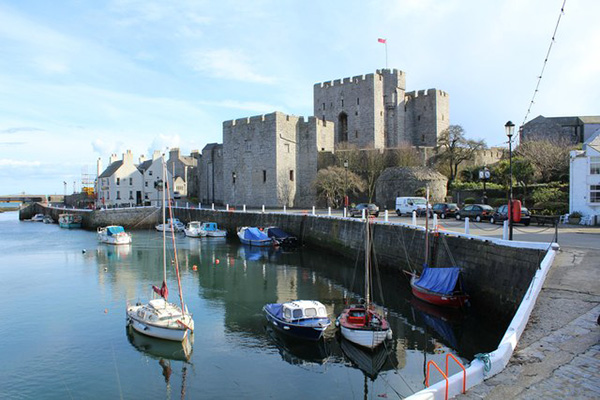 Located in the town of Castletown, Castle Rushen is one of the best-preserved medieval castles in Europe. Built for Norse rulers and later expanded by successive lords, the castle served as a royal residence, military stronghold, prison, and administrative centre.
Visitors can explore its towers, chambers, and battlements while learning about centuries of Manx history. The castle offers a fascinating glimpse into medieval life and remains one of the island’s most iconic landmarks.
2. Laxey Wheel
The Great Laxey Wheel, affectionately known as “Lady Isabella,” is the largest working waterwheel in the world. Constructed in 1854, it was designed to pump water from the nearby lead and zinc mines.
Standing more than 22 metres (72 feet) high, the wheel is an impressive feat of Victorian engineering. Visitors can climb nearby viewing platforms and explore the surrounding mining heritage trails.
3. Peel Castle
Situated dramatically on St Patrick’s Isle and connected to the town of Peel by a causeway, Peel Castle is steeped in history and legend. Originally built by Vikings in the eleventh century, the castle later became an important religious centre.
Its atmospheric ruins overlook the sea and provide spectacular views. The site is also associated with the legendary Moddey Dhoo, a mysterious black dog said to haunt the castle.
4. Snaefell Mountain Railway
Snaefell is the highest mountain on the Isle of Man, rising to 620 metres (2,034 feet). Visitors can reach the summit aboard the historic Snaefell Mountain Railway, which has been operating since 1895.
On a clear day, it is said that seven kingdoms can be seen from the summit: England, Ireland, Scotland, Wales, the Isle of Man, Heaven, and the Sea Kingdom of Manannán. The panoramic views make it one of the island’s most memorable experiences.
Little-Known Facts About the Isle of Man
The Oldest Continuous Parliament
Tynwald claims to be the oldest continuous parliament in the world. It has operated for more than 1,000 years, predating the British Parliament by several centuries.
A Nearly Lost Language
The Manx language was once considered extinct when the last native speaker, Ned Maddrell, died in 1974. However, dedicated revival efforts have brought the language back, and children today can attend schools where lessons are taught in Manx.
No Speed Limit on Many Roads
Unlike most countries, many rural roads on the Isle of Man have no national speed limit. Drivers must still travel safely and responsibly, but the absence of blanket limits is unusual in Europe.
Home of the Famous TT Races
The Isle of Man TT (Tourist Trophy) motorcycle races are among the most famous and challenging motorsport events in the world. First held in 1907, the races attract competitors and spectators from across the globe.
A Unique National Symbol
The island’s flag features a triskelion—three armoured legs joined at the thigh. This unusual emblem is accompanied by the Latin motto Quocunque Jeceris Stabit, meaning “Whithersoever you throw it, it will stand.”
Not Part of the United Kingdom
Many people assume the Isle of Man is part of the UK. In fact, it is a self-governing Crown Dependency. It is not part of the United Kingdom and has its own parliament and legal system.
Conclusion
The Isle of Man is far more than a picturesque island in the Irish Sea. Its history encompasses prehistoric settlers, Celtic traditions, Viking kingdoms, medieval castles, maritime trade, and modern innovation. Through centuries of political change and cultural influences, the island has maintained a strong sense of identity and independence.
Whether exploring ancient monuments, riding historic railways, visiting imposing castles, or discovering unique traditions, visitors quickly realise that the Isle of Man offers a remarkable journey through time. Its blend of history, culture, and natural beauty ensures that this small island continues to captivate all who visit, making it one of the most fascinating destinations in the British Isles.